

A long general-aviation journey can connect places, people and learning in a way that a simple destination flight does not. Its appeal comes partly from variety, but that variety also increases the need for preparation. The route should fit the aircraft, pilot, passengers and purpose rather than a fixed line drawn across a map. This guide focuses on the planning questions a modern pilot can investigate with qualified support and current information before an ambitious trip becomes a schedule.
Give the journey a purpose beyond distance
Describe why the trip matters. You may want to visit family, explore regional airports, document landscapes or develop experience through appropriate instruction. A clear purpose helps decide which stops are essential and which can change. Without that distinction, every planned destination can acquire unnecessary importance and make a revised route feel like a failure.
Write a short set of priorities. Include the experience you want, the constraints that matter and the conditions that would lead to postponement. Discuss the plan with an instructor or experienced mentor whose knowledge fits the intended flying. The conversation should test assumptions rather than simply endorse the ambition. A journey becomes more workable when its purpose can survive a changed stop, an extra night or the decision to leave a particular region for another time.
Build a route in manageable sections
Break the journey into sections that can be evaluated independently. Consider aircraft capability, airport options, weather patterns and available support. A route that is attractive on a broad map may contain individual legs whose assumptions need closer review. Use current charts and airport information and identify alternatives before treating a leg as part of the committed itinerary.
Avoid planning each day at the maximum distance you hope to achieve. Briefing, ground transport, refueling, rest and unexpected delays consume time. A modest plan can leave room to respond intelligently to conditions. Keep the next section flexible until updated information supports it. The aim is not to remove all uncertainty from a long trip, but to avoid making every later stage depend on the first day unfolding exactly as imagined.
Match the plan to recent experience
Consider how the intended environments compare with your recent flying. Unfamiliar terrain, busy airports, different weather and equipment demands can add workload. A certificate alone does not describe readiness for every combination. Discuss areas that deserve instruction or supervised practice before departure and identify where a simpler route may be appropriate.
Prepare passengers as well. Explain that aviation timing can change and that an extra night or alternate destination may be part of the plan. Ask about comfort, baggage and commitments that could create pressure later. A passenger who understands the flexibility from the beginning is better positioned to support a revised decision. The pilot should not have to discover during a weather delay that someone’s essential appointment depends on completing the next leg at a fixed time.
Organize aircraft and maintenance support
Work with the appropriate maintenance professionals to review the aircraft’s status and the planned use. Understand relevant inspections, operating documents and equipment. Identify how support would be obtained away from home. The purpose is not to predict every technical issue, but to know who to contact and what information is needed if the plan is interrupted.
Keep essential documents and contact details organized in a form you can access practically. Confirm airport fuel and service information directly where the route depends on it. Consider the consequences of an unavailable service rather than assuming another option will be convenient. A support plan should include decision authority and expenses if several owners or organizations are involved. Clear arrangements reduce the chance that an aircraft issue becomes more difficult because the people responsible have different expectations.
Treat each departure as a fresh decision
A long itinerary can create a misleading sense that later legs were approved when the overall journey was planned. Conditions need current evaluation. Review the weather, notices, aircraft status and personal readiness for the actual flight. Yesterday’s successful leg does not establish that today’s environment is suitable, and a reservation at the next stop does not make an uncertain forecast less important.
Keep alternatives usable. A diversion or delay is easier to accept when practical arrangements have been considered. Discuss who needs to be informed and which bookings can change. Avoid using the distance already traveled as a reason to continue. The journey’s value comes from the experience and learning, not from proving that the original line can be completed regardless of the information available at each new departure.
Gallery: document the experience accurately
Photographs and notes can make a journey meaningful to others, but they should be captured without adding inappropriate distraction. Agree on who handles documentation and when it is suitable. Prepare camera equipment and responsibilities on the ground. A desired image should remain optional, with the pilot free to decline a request that does not fit the flight.
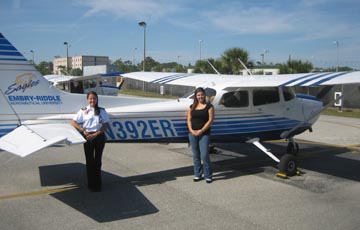
When sharing the story, identify dates and locations accurately. Separate observation from technical advice and avoid implying that a past route is a current recommendation for every reader. The small gallery on this page uses available aviation-related photographs as illustrations, with captions that identify their subjects rather than invent a particular itinerary. A responsible account can inspire interest while making clear that another pilot must evaluate their own aircraft, preparation and current conditions.
Review the journey as a learning project
After each section, note what preparation helped and which assumptions proved weak. Keep the review short enough to use: one decision that worked, one question and one change for the next stage. A long trip creates many opportunities to refine a planning method, but those opportunities are easily lost if the only record is a set of destinations and photographs.
After returning, discuss significant learning points with an appropriate instructor or mentor. Identify whether a particular environment or equipment task deserves more focused work. Keep the useful contacts and preparation notes for future trips, while updating operational information when it is next needed. A meaningful journey is not measured only by distance. Its lasting value can be a clearer understanding of planning, personal limitations and the flexibility required to make ambitious flying fit the circumstances actually encountered.
A simple post-leg note
Use three headings after a section of the journey: information, decisions and logistics. Under information, record what proved useful or incomplete. Under decisions, note one choice worth discussing later. Under logistics, identify a practical detail to confirm before another stop. Keep the note concise and complete it only when appropriate, away from flight duties. This structure preserves learning without pretending that a travel diary is an operational checklist. It can also make a later instructor discussion more precise because the question retains its context instead of becoming a vague memory of a difficult day.